Running a TCM clinic means picking suitable moxibustion tools to balance treatment effect, labor cost, hygiene and local safety rules. Below are 3 core comparisons for your reference.
1. Point Moxibustion vs Area Moxibustion
Point Moxibustion (Moxa stick suspended moxibustion, direct moxa cones.etc)
Best for targeted therapy based on TCM pattern differentiation, pain points and acupuncture combined treatment.
Pros: Concentrated heat, strong acupoint stimulation, high professionalism and better profit margin.
Cons: Labor-intensive, time-consuming, requires experienced therapists.
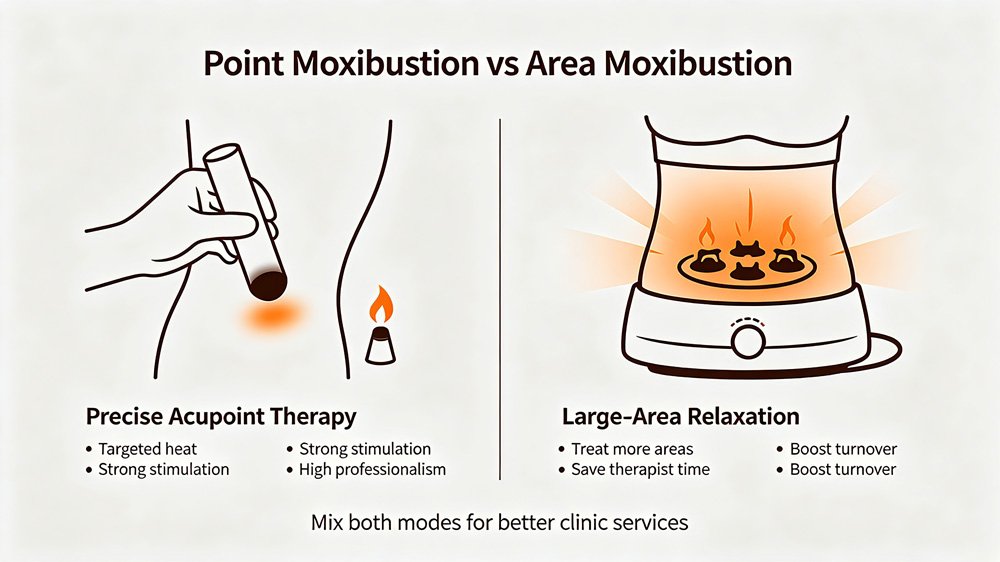
Area Moxibustion (Waist moxa boxes, abdominal moxa boxes.etc)
Best for large-area cold-damp conditioning on the back, abdomen or whole meridians and relaxation wellness programs.
Pros: Frees therapists, treats multiple areas at once, ideal for packaged services to boost revenue.
Cons: Diffused heat, weak precise acupoint stimulation, not ideal for refined therapeutic treatment.
### Clinic Matching Tip
Professional TCM clinics: Prioritize point moxibustion, use area moxibustion as support.
Wellness therapy clinics: Prioritize area moxibustion, add point moxibustion as an upsell service.
2. Disposable Moxibustion Tools vs Reusable Moxa Boxes
Disposable Moxibustion Tools (Disposable moxa tubes, self-adhesive moxa cones)
Pros: No cleaning work, no ash residue, low cross-contamination risk. Easy for new therapists to operate; sell to clients for home use to expand income. Compliant with strict hygiene standards.
Cons: Higher long-term consumable cost, lower single-service profit; environmental concerns in some European & American markets.
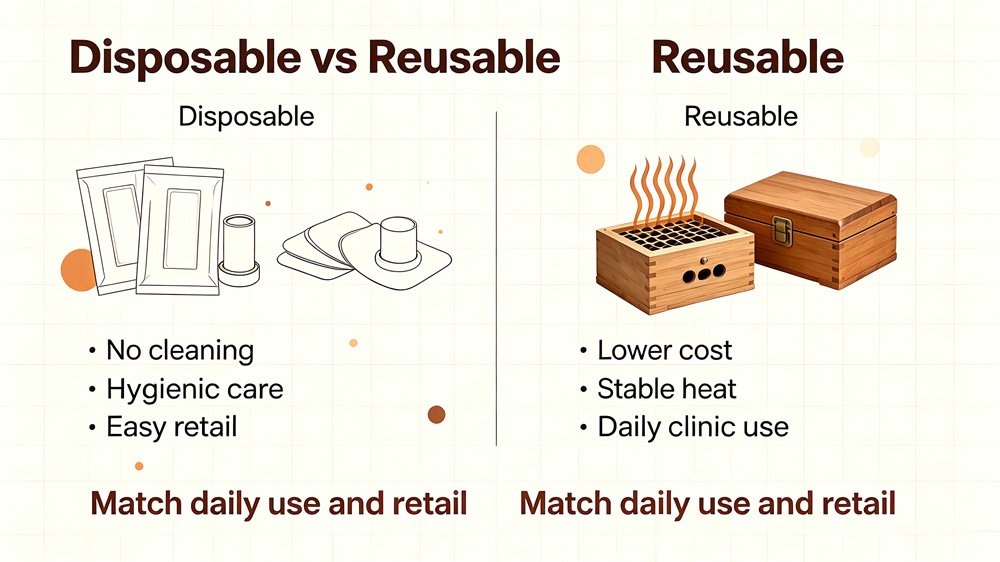
Reusable Moxa Boxes (Solid wood reusable moxa boxes)
Pros: Lower long-term running cost, durable for years. Stable and controllable heat for better client experience; premium look for high-end therapy packages.
Cons: Requires ash cleaning and regular disinfection, extra labor; hygiene risks with improper sanitization.
### Clinic Matching Tip
In-clinic regular treatments: Use reusable moxa boxes to cut long-term costs.
Home kits, trial sessions or sensitive clients: Sell disposable tools as add-ons.
3. Electric Warm Moxibustion vs Open-Fire Moxibustion
Electric Warm Moxibustion (Electric moxa packs, infrared heating pads, smokeless electric moxa devices)
Pros: Flameless and smokeless, perfect for buildings with strict fire & smoke bans. Very low burn or fire risk; stable temperature control, simple operation.
Cons: Only surface warmth, lacks unique infrared spectrum and active substances from burning moxa wool; less effective for professional TCM treatment and requires equipment maintenance.
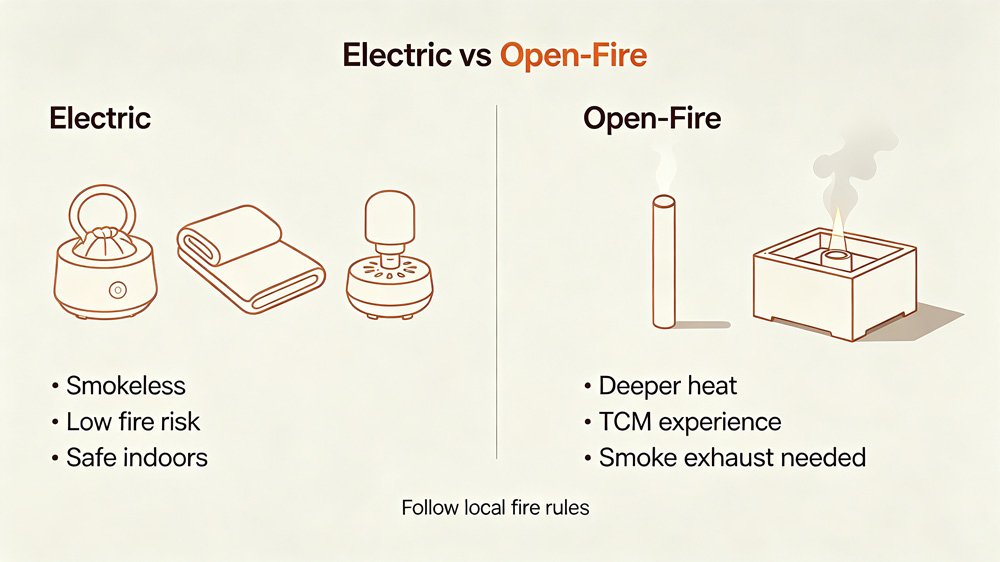
Open-Fire Moxibustion (Traditional moxa rolls, burning moxa boxes)
Pros: Recognized by classic TCM principles, deeper heat penetration, stronger client treatment experience — core competitive service for professional clinics. Wide range of mature moxa products available.
Cons: Smoke and fire hazards, needs smoke extraction systems; therapists must receive anti-scald training.
### Clinic Matching Tip
Licensed clinics with smoke exhaust systems: Take open-fire moxibustion as core service, electric warm moxibustion as auxiliary relaxation therapy.
Office building or small community clinics with fire restrictions: Use electric warm moxibustion primarily; add open-fire moxibustion with external smoke extractors for signature programs.